Beautiful Corruption: How Glitch Artists Are Fracturing Fall Into Something Stranger and More Honest
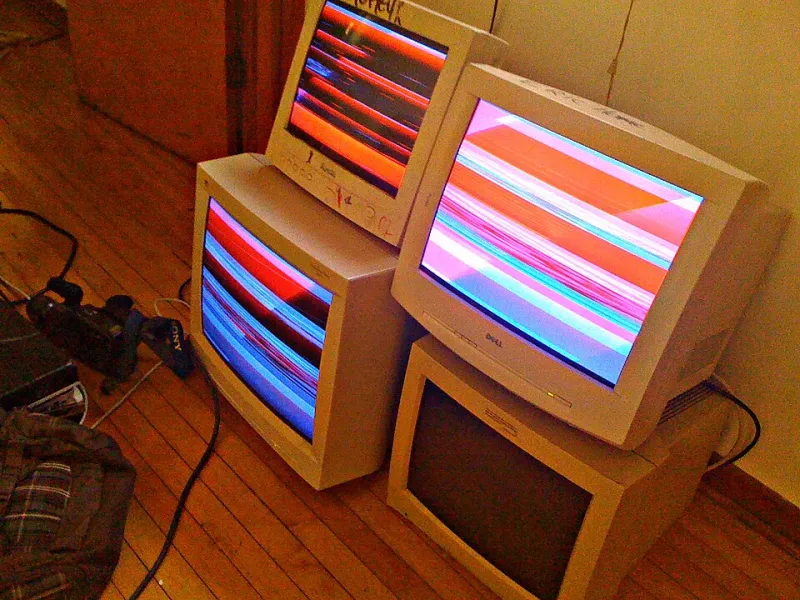
Photo: jonCates, CC BY-SA 4.0, via Wikimedia Commons
There's a particular kind of autumn photograph that's almost too perfect. The maple tree at peak color. The light hitting at exactly the right angle. The composition so clean it looks like a screen saver. You've seen it thousands of times, and somewhere along the way, you probably stopped really seeing it at all.
A loosely connected movement of digital artists has a response to that saturation: break it. Corrupt it. Let the data bleed and the pixels drift and the image fall apart in ways that are jarring, disorienting, and — oddly enough — far more emotionally honest about what autumn actually feels like.
Glitch art isn't new. But its application to seasonal imagery, specifically fall, has picked up serious momentum over the last few years, producing work that sits in genuinely uncomfortable territory between beauty and deterioration. Which, when you think about it, is exactly where autumn lives.
What Glitch Art Actually Is
For the uninitiated, glitch art is the practice of intentionally introducing errors into digital or electronic media to create visual distortion. This can mean manipulating image files at the data level — opening a JPEG in a text editor and manually corrupting the code — or using software to simulate the visual artifacts that occur when digital systems fail. Pixel sorting, databending, circuit bending, compression artifacts weaponized as aesthetic choices: the toolkit is varied, and the results range from subtle and eerie to aggressively fragmented.
The movement draws from a long tradition of artists who have treated malfunction as medium. Nam June Paik was distorting video signals in the 1960s. Noise musicians have been working with feedback and error for decades. What's different now is the accessibility. Anyone with a laptop, some free software, and a willingness to break things can produce glitch work. And a growing number of them are pointing that energy at the fall season specifically.
Why Autumn and Glitch Art Are a Natural Match
On the surface, glitch aesthetics seem like the opposite of everything autumn traditionally represents in visual culture. Fall is warm, organic, textured, rooted in the physical world. Glitch is cold, digital, synthetic, a product of machine failure. The pairing feels counterintuitive.
But spend any time with the work being made in this space, and the logic becomes clear fast.
Autumn is, at its core, a season of structured decay. The leaves aren't just turning pretty colors — they're dying, the tree is withdrawing resources, the whole system is breaking down in a controlled and ultimately cyclical way. There's something almost algorithmic about it. When a glitch artist takes a fall landscape and runs a pixel sort through it — pulling colors into long horizontal streaks, fragmenting the treeline into something between a painting and a data visualization — they're not destroying the image so much as revealing a different kind of truth about what's already happening in it.
The corruption mirrors the process. The breakdown is the point.
Artists Working in This Space
Creators working at this intersection are scattered across platforms, and their approaches vary widely, which is part of what makes the movement feel genuinely alive rather than trend-chasing.
Some artists start with their own fall photography — hiking into New England forests or Pacific Northwest trails in October, shooting with intention — and then subject those images to elaborate databending processes back in the studio. The source material is deeply personal and rooted in physical place; the final output looks like it was transmitted from another dimension. That tension between the familiar and the alien is doing a lot of emotional work.
Others work almost entirely in the digital realm, generating autumn imagery through AI tools and then deliberately degrading the output, treating the glitch as a kind of critique of algorithmic perfection. When an AI generates a flawless fall scene and an artist then fractures it with compression artifacts and color channel separation, there's a commentary embedded in that process — something about the uncanny valley of machine-generated beauty and what gets lost when organic processes get smoothed into ideals.
Still others are working with video, creating short looping pieces where fall landscapes cycle through states of coherence and dissolution — a forest clearing that briefly resolves into clarity before breaking apart into horizontal data smears, then slowly reconstituting. Watching these loops is genuinely disorienting in a way that lingers. They feel more like meditation objects than videos.
The Instagram Problem and the Glitch Response
It's impossible to talk about this movement without acknowledging what it's reacting against. The dominant visual culture around autumn in the US — especially on social media — has become almost aggressively pristine. Foliage tourism is a real and significant phenomenon, and the images it produces tend toward a very specific kind of saturated, high-contrast, compositionally safe perfection.
Those images are beautiful. They're also, increasingly, indistinguishable from each other. The same overlooks, the same color grades, the same emotional register. Fall as content.
Glitch artists working with seasonal imagery are, consciously or not, pushing back against that flattening. By introducing error, they're reintroducing specificity. A corrupted fall image can't be mistaken for someone else's corrupted fall image in the same way that two perfectly composed leaf shots can blur together in your memory. The brokenness is individual. The malfunction is a signature.
There's also something about impermanence that glitch art captures better than pristine photography ever could. Fall is the season most explicitly about things not lasting. A pixel-sorted maple tree that looks like it's dissolving into its own color data is maybe the most accurate visual representation of what a maple tree in October actually is: something gorgeous and temporary, in the process of coming apart.
What This Shift Tells Us About Seasonal Creativity
The emergence of this aesthetic points to something broader happening in how digital creatives relate to the natural world and to seasonal imagery specifically. There's growing discomfort with the idea that nature needs to be presented as flawless to be worth looking at. There's skepticism toward the kind of visual perfection that digital tools have made so easy to achieve and so hollow to encounter.
Glitch art applied to autumn is, in a sense, a reclamation project. It's artists insisting that the season is more complicated, stranger, and more emotionally textured than any perfectly exposed golden-hour shot can capture. That the beauty is inseparable from the deterioration. That the pixels, like the leaves, are allowed to fall.
At Autumn Pixels, that's a philosophy we find pretty hard to argue with.