Chasing the Amber Hour: A Photographer's Field Guide to Fall's Most Beautiful Light
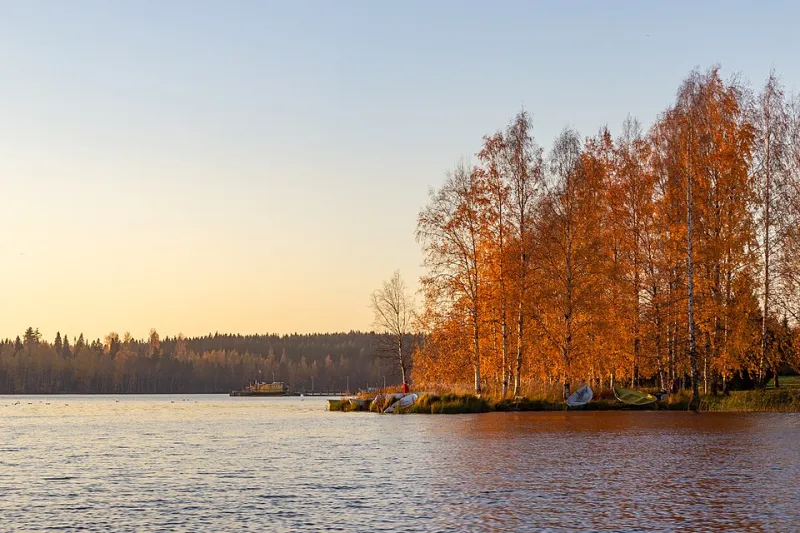
Photo: Markus Säynevirta, CC BY-SA 4.0, via Wikimedia Commons
There's a specific kind of quiet that happens about forty minutes before sunset in October. The wind settles, the shadows stretch long and dramatic across leaf-covered ground, and the whole world seems to glow from somewhere inside itself. Photographers call it golden hour. In autumn, it becomes something else entirely — call it the amber hour, a convergence of seasonal color and atmospheric light that won't last more than a few weeks before bare branches and gray skies take over.
If you've been meaning to get serious about fall photography, this is your window. And it closes faster than you think.
Why Autumn Transforms Golden Hour
Golden hour exists year-round, technically speaking. The sun dips low, the atmosphere scatters blue light, and everything takes on that warm, cinematic quality we all love. But fall adds a second layer. The foliage itself — those reds, oranges, and deep yellows — acts almost like a natural gel filter, amplifying warm tones and creating a feedback loop of color that summer and spring simply can't replicate.
The science behind it is straightforward: chlorophyll breaks down as daylight shortens, revealing the underlying pigments (carotenoids and anthocyanins) that were always there, waiting. When low-angle autumn sunlight hits a hillside of maples or a creek lined with cottonwoods, you're not just photographing a landscape. You're photographing light bouncing through a living color palette.
That's the magic worth chasing.
Timing Is Everything — And It Changes Weekly
Unlike spring, which unfolds gradually, fall color peaks hard and drops fast. In New England, peak foliage typically runs from late September through mid-October at higher elevations, rolling south and downhill through the month. In the Smoky Mountains of Tennessee and North Carolina, peak usually hits mid-to-late October. The Ozarks in Missouri and Arkansas tend to peak in early November, and the Texas Hill Country — often overlooked — offers surprising color through late November.
For golden hour specifically, you'll want to cross-reference two things: the local foliage forecast (sites like the Foliage Network and state tourism boards publish these) and a sun position app. PhotoPills, The Photographer's Ephemeris, and Sun Surveyor are all solid choices. These tools let you preview exactly where the sun will set relative to your location, so you're not guessing when you arrive at a trailhead at 5:45 p.m. with fading light.
Pro tip: Scout your location at least one day before your shoot. Walk the space in midday light, find your compositions, and note where shadows will fall during golden hour. The last thing you want is to discover your ideal foreground is blocked by a ridge right when the light gets good.
Camera Settings for Autumn's Low Light
Golden hour is forgiving in some ways and unforgiving in others. The light is beautiful but it moves fast — you might have a 15-minute window where everything is perfect before the warmth fades into the cool blue of dusk.
Here's a starting framework to work from:
- ISO: Start at ISO 100–400. As light fades, you can push to 800 or 1600 if you're shooting handheld, but try to keep it low to retain detail in foliage.
- Aperture: For sweeping landscape shots, f/8 to f/11 gives you sharp depth across a wide scene. If you want to isolate a single leaf or tree detail with a creamy background, open up to f/2.8 or f/4.
- Shutter Speed: In golden hour, you're often working with enough light to shoot handheld at 1/125s or faster. As it dims, consider a tripod and longer exposures — still water reflecting fall color looks incredible at 1/4s to 1s.
- White Balance: Resist the urge to set white balance to Auto. Try Cloudy or Shade — both add warmth that complements the season without overcooking the tones. Shoot RAW, always, so you have full control in post.
Lens Recommendations by Shooting Style
Your lens choice shapes the entire feel of a golden hour fall image. A few versatile options:
Wide-angle (16–35mm): Perfect for sweeping valley shots, forest interiors, and compositions where you want to emphasize vast canopies of color. The 16–35mm f/2.8 is a workhorse for this kind of work.
Standard zoom (24–70mm): The most flexible option for location shoots where you're moving through a landscape. Great for both environmental portraits and mid-range landscape compositions.
Telephoto (70–200mm or longer): Underused in fall photography but incredibly effective. Compression flattens layers of color-covered hillsides into abstract tapestries of texture. The Smoky Mountains are especially stunning when shot with a 200mm from a pull-off on the Blue Ridge Parkway.
Macro: Don't sleep on macro work during golden hour. A single backlit maple leaf against an out-of-focus forest background, shot at f/4 with warm side light, can be one of the most compelling images you take all season.
Iconic US Locations Worth the Trip
Certain places earn their reputations. A few that deliver consistently:
Acadia National Park, Maine — Jordan Pond and the Bubble Mountains during peak foliage are genuinely otherworldly. Get there early (before 6 a.m.) to beat the crowds and catch the mist on the water.
Maroon Bells, Colorado — The iconic reflected aspens shot is done to death, but for good reason. Go on a weekday in late September, and the golden-hour light on those peaks alongside yellow aspen groves earns every cliché.
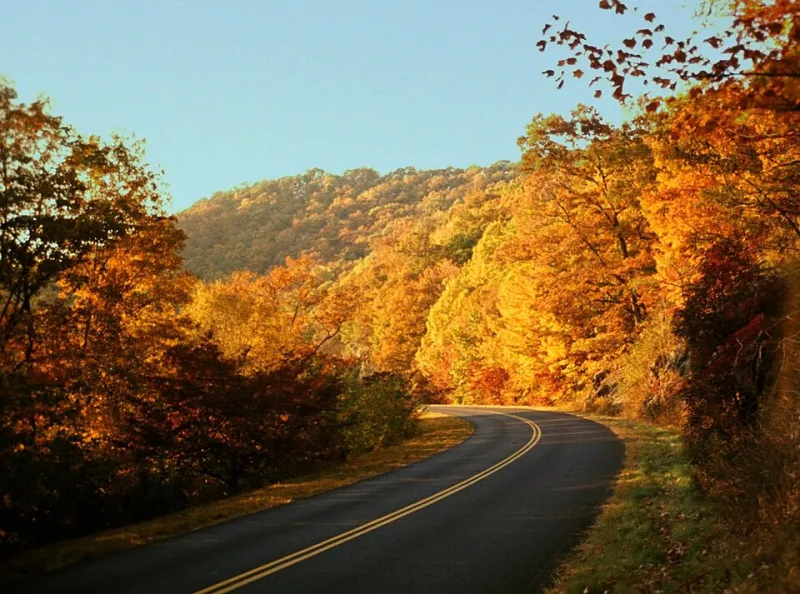
Blue Ridge Parkway, Virginia/North Carolina — Miles of accessible overlooks with layered mountain ridges. The Parkway practically designs compositions for you; your job is just showing up with the right light.
Palouse, Washington — Less talked about for fall, but the rolling wheat fields and farmland take on an almost painterly quality in October's low light. Steptoe Butte State Park gives you a 360-degree elevated view that's hard to beat.
Composition Principles Specific to Fall
A few things work especially well during the amber hour that you might not apply in other seasons:
Use the light as a subject. Backlighting translucent leaves creates a glow effect that feels almost stained-glass. Position yourself so the sun is just behind or beside your subject, and let the foliage do the work.
Layer your foreground. Fallen leaves, mossy rocks, and forest floors make rich, textured foregrounds that anchor wide-angle shots. The rule of thirds matters here — get low and fill the bottom third with detail.
Don't ignore the shadows. Long autumn shadows create leading lines across fields and paths. A single tree casting a 30-foot shadow across a meadow is a composition worth stopping for.
Embrace negative space. A lone tree in peak color against a clean sky, shot at golden hour, needs nothing else. Resist the urge to overcomplicate.
The Window Closes — Shoot Now
Every photographer talks about wanting to capture fall. Fewer actually plan around it with the intentionality the season demands. The amber hour is real, it's brief, and it rewards those who show up prepared.
Check the foliage forecasts. Download your sun app. Scout your location. Then go stand in the light while it lasts.